


Community Benefits and Wellbeing
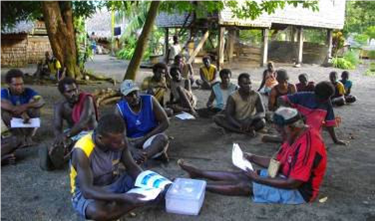 TDA works to reward its community members for supporting conservation by providing scholarships, job opportunities, sustainable livelihoods opportunities and other benefits.
Community members benefit financially from the conservation program, through employment opportunities as rangers, marine monitors, guides, hospitality workers and casual builders and labourers. TDA members also benefit from incentive programs, such as the leatherback conservation incentive program on neighbouring Rendova Island. This program rewards members of local communities for finding, recording and protecting leatherback turtle nests on their local beaches.
But the benefits of the conservation program for local communities go beyond direct monetary rewards. Descendants benefit from having access to a healthy marine ecosystem on Tetepare – this is particularly important for local communities who depend on artisanal fishing resources.
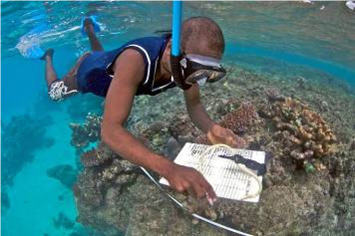
All over the world, fisheries are collapsing. But in the waters around Tetepare, healthy fish populations still exist, thanks in part to the ranger-enforced MPA. While Tetepare’s MPA is a permanent no-take zone and cannot be fished, the area acts as a nursery and refuge for fish, and ultimately helps to boost fish numbers outside the protected area. Our regular marine monitoring has shown Tetepare’s reefs and fish numbers are healthy, both inside and outside the MPA.
 Descendants come to the island regularly to harvest resources. They fish, dive for trochus and crayfish and hunt pigs. The island, with its abundant resources, is seen as a larder for feasts, where people can access good stocks of resources, thanks to the sustainable management practices of TDA.
We hold regular awareness meetings in our member communities to explain the Tetepare project activities, as well as to educate and empower members to sustainably manage the natural resources in their own local areas and conserve their environments. Our staff members are also encouraged to teach their own communities more about conservation.
We hope to lead by example – to show people how conservation can be a benefit rather than a burden.